Nils Reed · 11 September 2026
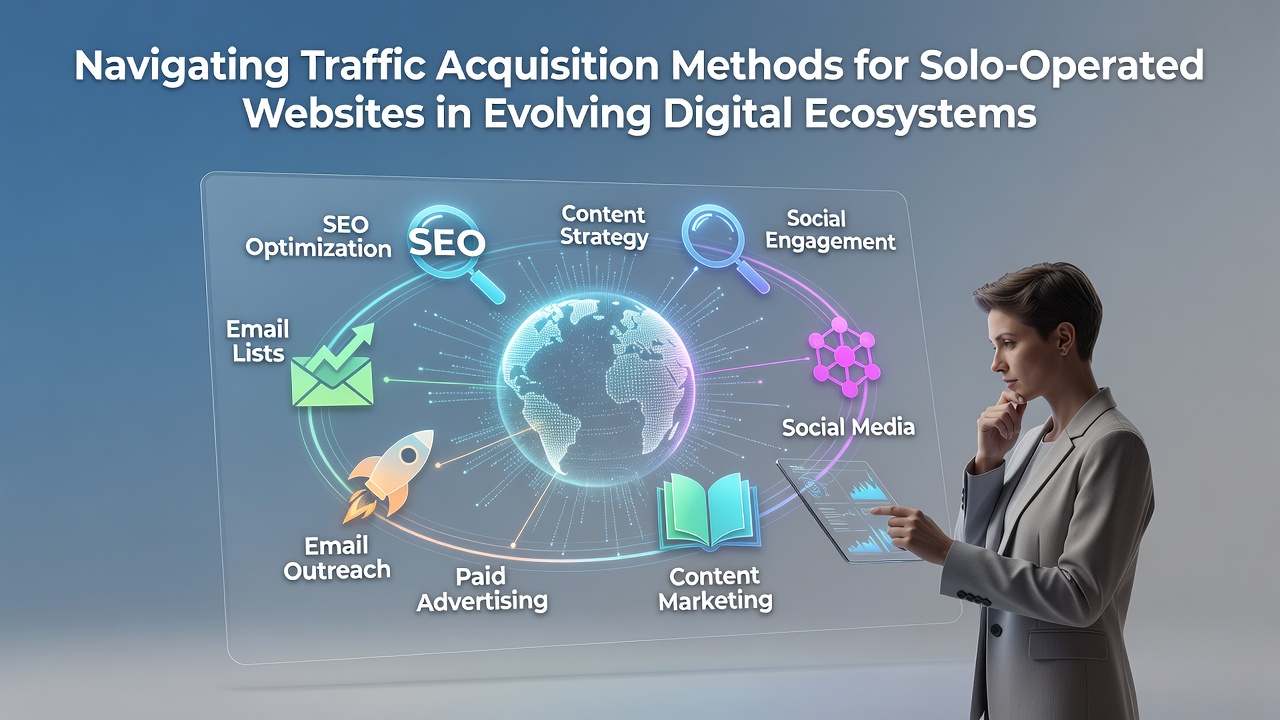
Navigating Traffic Acquisition Methods for Solo Operated Websites in Evolving Digital Ecosystems
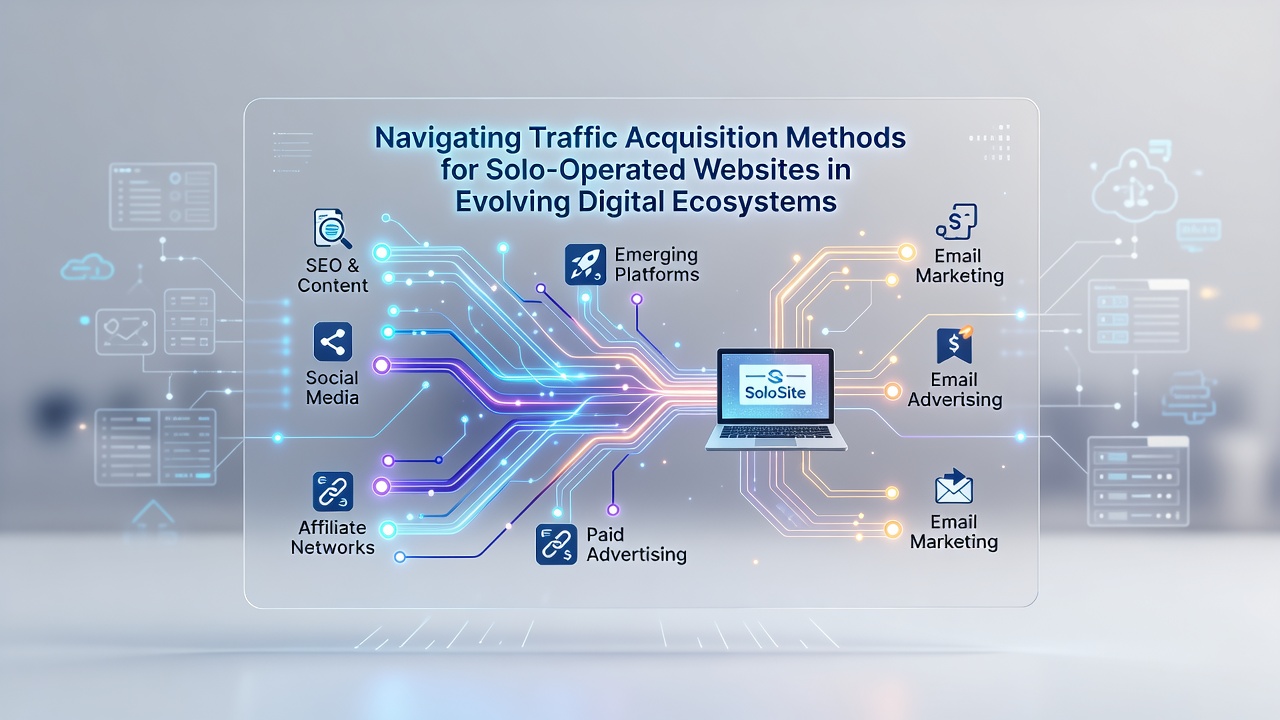
Traffic acquisition for solo operated websites requires consistent attention to shifting platform algorithms, privacy regulations, and user behavior patterns that continue to reshape digital ecosystems, and researchers track these changes through ongoing industry reports that document how independent operators adapt their approaches over time. Data from multiple regions shows that organic methods still deliver substantial portions of visits when sites maintain technical standards and content relevance, while paid channels provide measurable but variable returns depending on targeting precision and budget allocation.
Organic Search Optimization in Current Conditions
Search engines update ranking factors regularly, and operators who monitor core algorithm adjustments find that technical site health, mobile responsiveness, and structured data implementation remain foundational elements that influence visibility across major engines. Studies from academic institutions indicate that sites focusing on user intent matching and page experience metrics sustain longer-term referral volumes compared to those relying solely on keyword density tactics, and evidence from North American research groups confirms that backlink quality continues to outweigh quantity in most evaluated cases.
Those managing single-person sites often combine keyword research tools with analytics platforms to identify gaps in existing content, which allows incremental improvements without large teams or external agencies, while observers note that localized search features gain importance as voice queries increase across devices.
Social and Community-Driven Channels
Platforms such as professional networks and niche forums serve as consistent referral sources when operators participate authentically rather than through automated posting schedules, and figures from European digital economy analyses reveal that engagement metrics correlate with referral traffic more strongly than follower counts alone. Community-driven distribution works effectively for solo operators who build reciprocal relationships with similar sites, creating shared audiences that generate repeat visits over extended periods.
Short-form video and image-based networks have expanded their roles in traffic pathways, yet algorithms on these services reward consistency and originality, which demands regular content creation that fits within one person's operational capacity, and data indicates that cross-promotion between owned profiles and external communities multiplies reach without proportional increases in effort.
Direct and Email-Based Acquisition
Email lists built through value-driven opt-ins deliver predictable traffic that operators control directly, bypassing platform policy shifts that affect third-party distribution, while reports from international research bodies highlight that segmented messaging based on user behavior yields higher open and click rates than generic broadcasts. Solo operators maintain these lists using automation tools that handle scheduling and basic personalization, which reduces manual workload while preserving compliance with regional data protection standards.
Direct navigation traffic grows when sites establish recognizable branding and bookmark-worthy content, and metrics tracked across multiple markets show that repeat visitors contribute disproportionately to overall session depth and conversion actions compared to one-time arrivals from external sources.
Paid Methods and Performance Tracking
Paid search and display advertising allow targeted reach that supplements organic efforts, although cost-per-acquisition calculations require continuous monitoring to remain viable for limited budgets, and government statistical agencies in various countries publish benchmarks that help operators compare their results against sector averages. Retargeting sequences based on prior site interactions improve efficiency by focusing spend on audiences already familiar with the content, which aligns well with solo operation constraints.
Analytics integration across multiple tools provides the data needed to attribute traffic sources accurately, and operators who review performance weekly rather than monthly identify underperforming campaigns faster and reallocate resources accordingly, whereas aggregate reports from trade associations confirm that diversified acquisition mixes reduce reliance on any single channel during ecosystem disruptions.
Adaptation to Platform and Regulatory Shifts
Privacy frameworks in different jurisdictions continue to limit third-party tracking capabilities, prompting operators to adopt first-party data strategies and consent management systems that maintain compliance while preserving measurement accuracy. Artificial intelligence features embedded in search and content platforms influence how discovery occurs, and those who test structured outputs and entity-based optimization see measurable impacts on how their material surfaces in new interfaces.
By September 2026, ongoing refinements to digital market regulations across multiple continents are expected to standardize certain disclosure requirements for automated content and advertising, which will affect how solo operators document their traffic sources and partnerships. Operators who stay informed through official regulatory updates position their sites to adjust processes ahead of enforcement deadlines rather than reacting afterward.
Conclusion
Effective traffic acquisition for solo operated websites rests on diversified methods that balance controllable channels with adaptive responses to external platform changes, and longitudinal data from multiple sources demonstrates that consistent application of technical standards, audience engagement practices, and performance measurement supports sustained growth across evolving conditions. Operators who integrate these elements into repeatable workflows maintain resilience when individual channels experience volatility.